Why I Shoot 35mm Film at Weddings (And What It Means for Your Photos)
People ask me about film constantly. At consultations, at the end of wedding days, in DMs from couples who found me on Instagram. The question is always some version of the same thing: why film? In a world where digital cameras are extraordinary, why add the cost and the complexity and the waiting?
I've answered this question so many times that I know exactly where I land. But I also know that the real answer isn't technical. It's philosophical.
Film Slows Everything Down - In the Best Way
When I'm shooting digitally, there is no limit. I can take thousands of frames if I choose to. That freedom is powerful, but it carries a quiet cost: if you can capture everything, you can also stop being selective. You can stop waiting for the moment and start manufacturing proximity to it.
Film doesn't allow that. Each roll of 35mm gives me 36 frames. I load the camera, and I become more deliberate. I watch differently. I wait longer. I'm not looking for any version of the shot, I'm looking for the right one.
This changes how a wedding day feels, both for me and for the couple in front of my lens. When I raise a film camera, there is a different energy. Quieter. More considered. Couples respond to it even when they don't know why.
What Film Actually Looks Like and Why It Matters
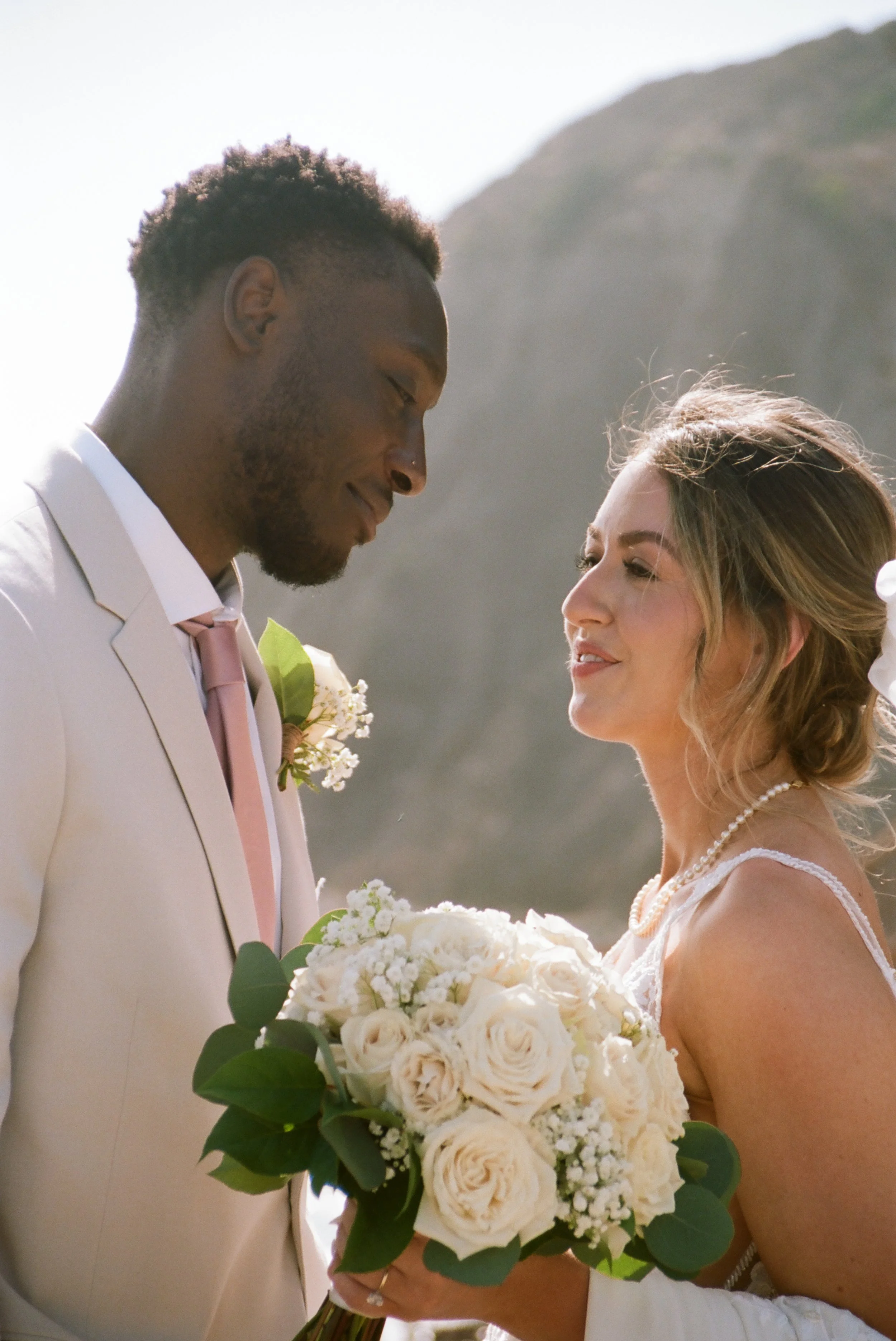
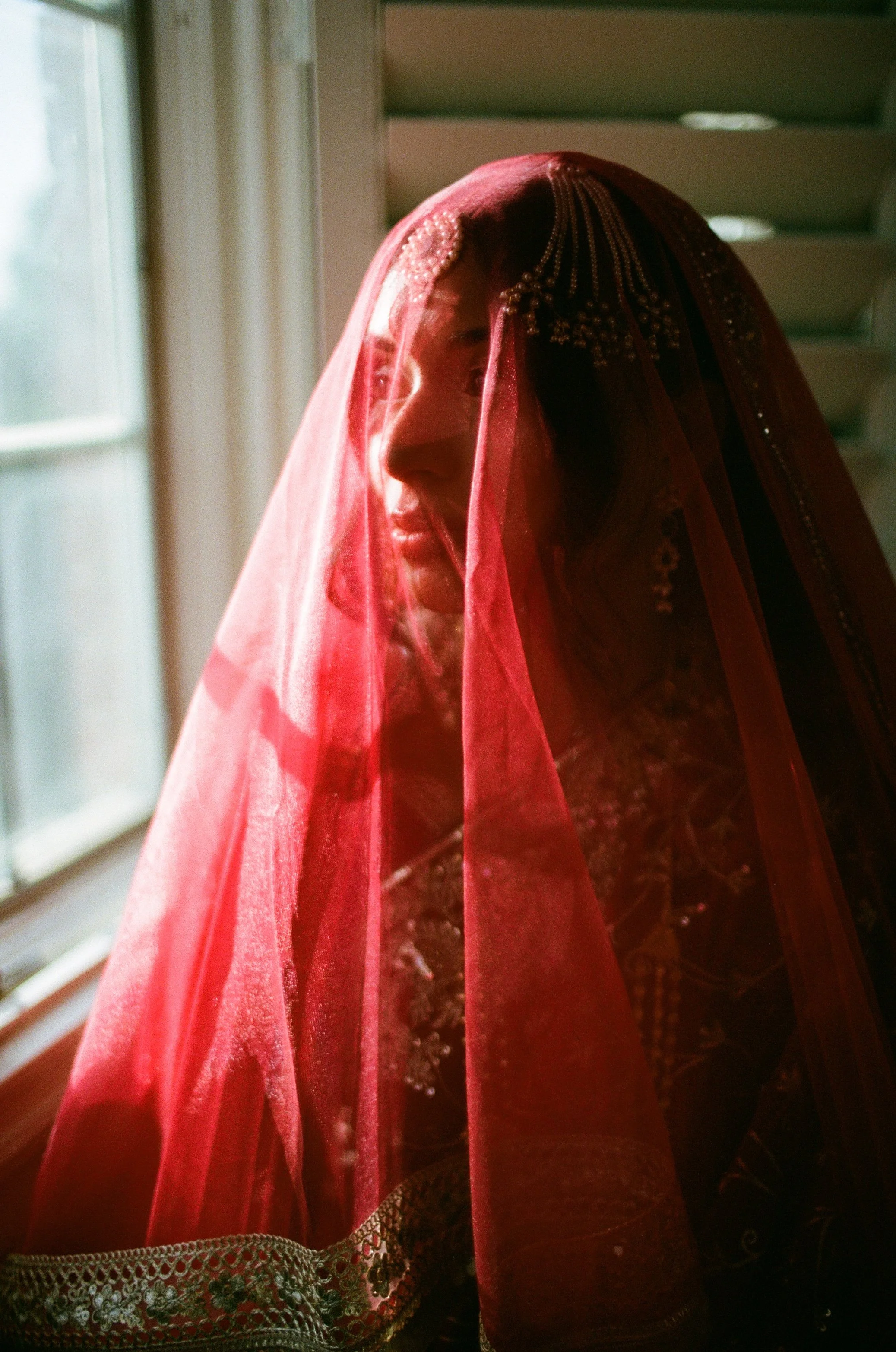
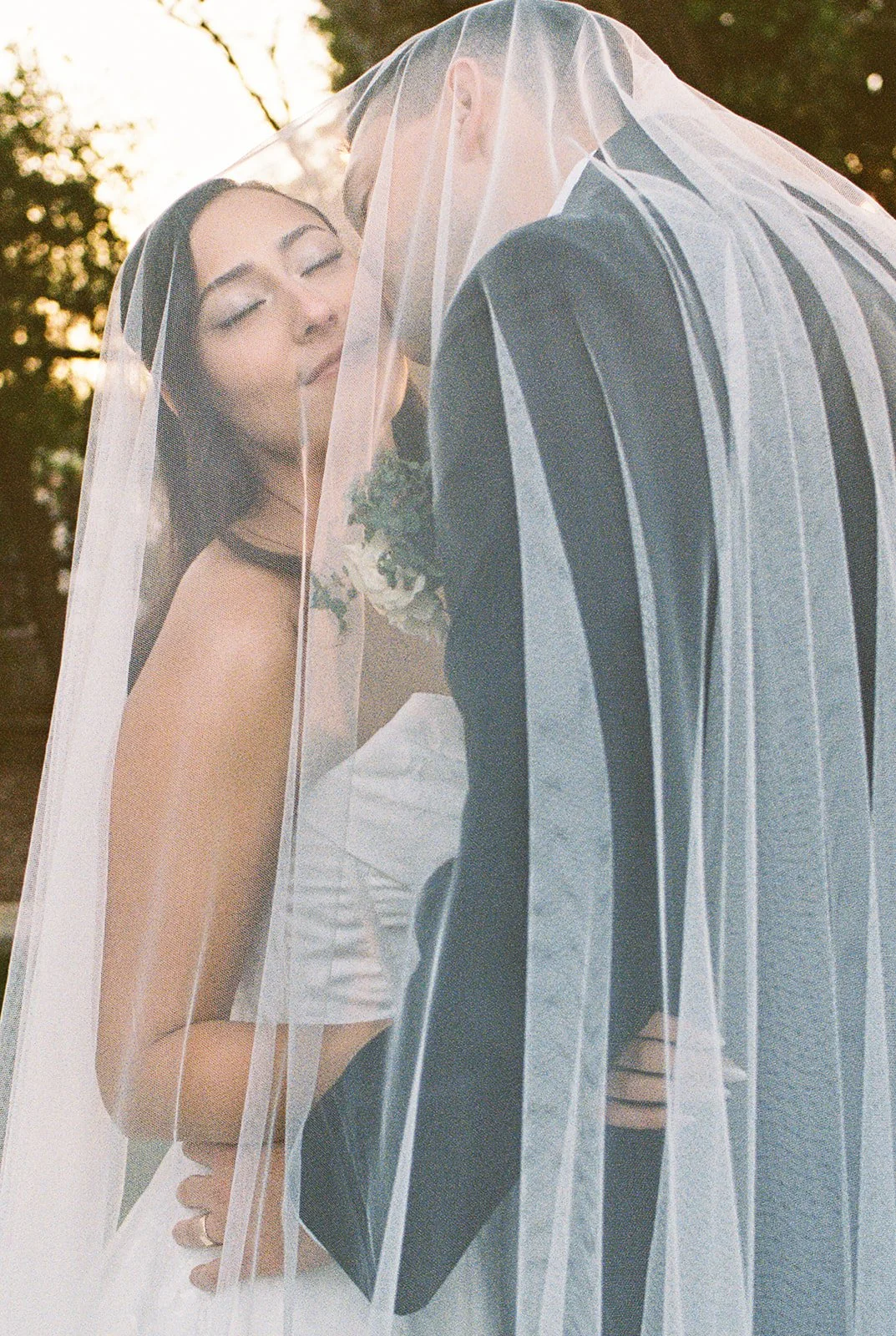
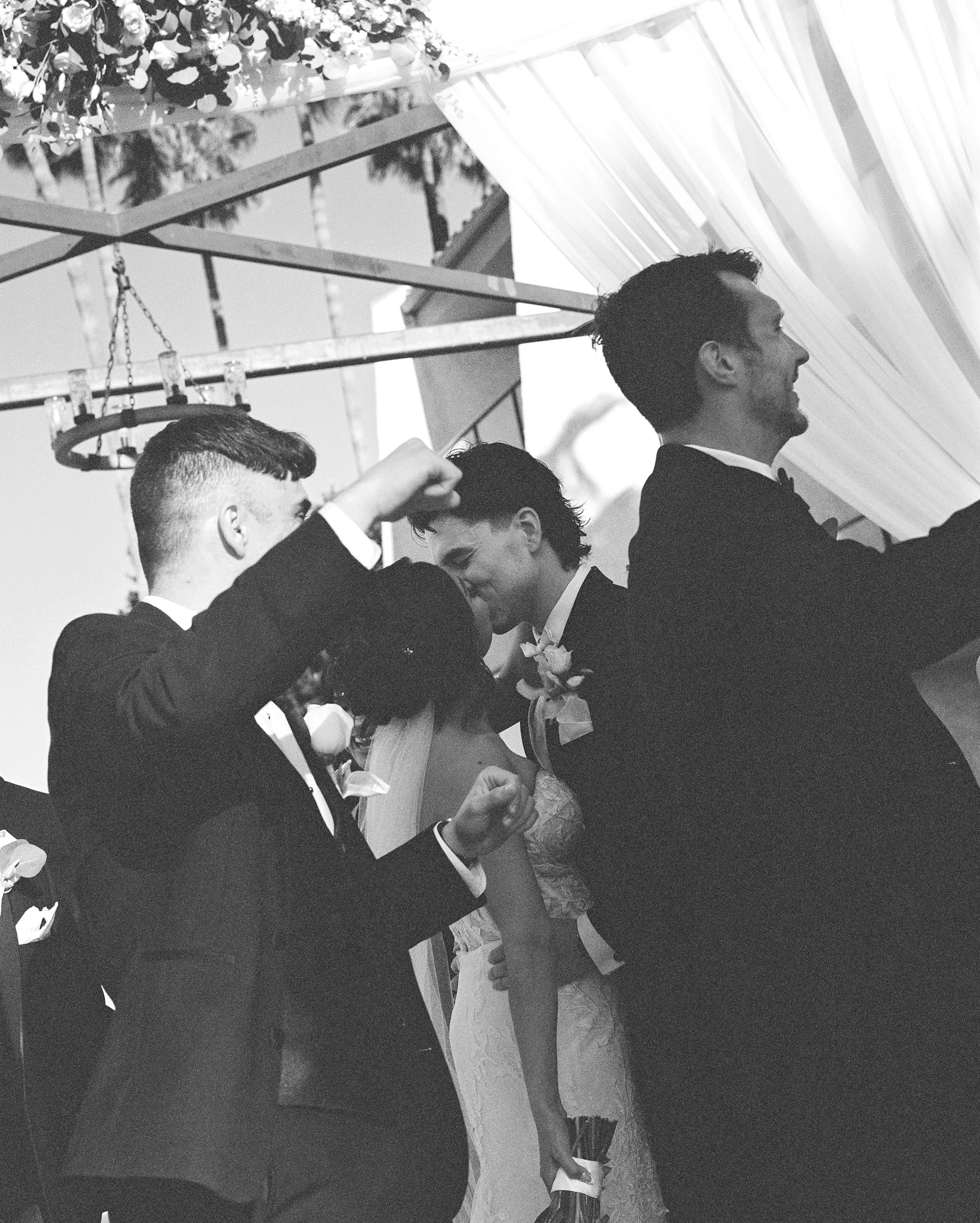
I want to be honest about something: film is not magic. A poor photograph on film is still a poor photograph. What film does is render light in a way that digital sensors still struggle to fully replicate, particularly the warmth of skin tones, the softness of highlights, and the quality of grain that reads as texture rather than noise.
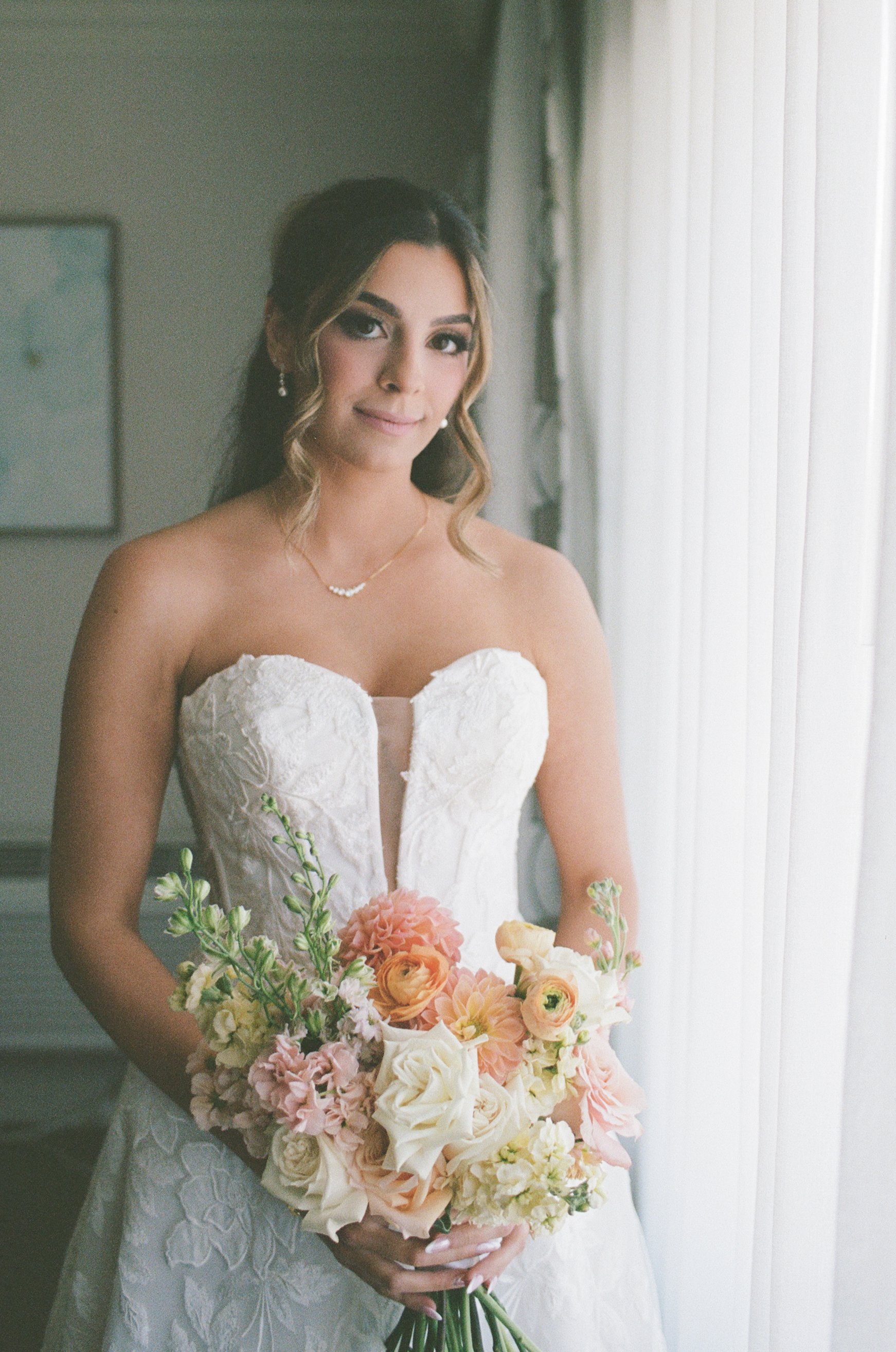
In practical terms, this means a photograph taken on 35mm film of a bride standing in afternoon light will have a luminosity that looks organic, almost painterly. The shadows lift gently, the whites hold detail without blowing out, and the overall image has a quality that couples often describe as feeling "timeless", which is exactly right. Film photography is what every generation before ours used to document the moments that mattered most.
When you hold a film photograph from your wedding, you're holding something made the same way your parents' wedding photographs were made. There is a continuity in that, and it matters.
Film Is Already Included in Every Collection
One of the most common misconceptions I encounter is that film photography is an expensive add-on. At Mace Wedding Photography, 35mm film coverage is included in every standard digital collection. It is not a luxury tier, it is part my workflow.
The reason for this is simple: I believe in it. I'm not offering film as an upsell, I'm offering it because I think it produces some of the most beautiful images of a wedding day, and I want every couple I photograph to have access to that.
After your wedding, the film rolls are sent to a professional lab for processing. You'll receive the digital scans alongside your full digital gallery. The physical negatives are stored safely as an additional layer of preservation, something no hard drive can offer.
Who Is Film Photography Right For?
Film is not for every couple, and I say that without judgment. If you want maximum coverage - thousands of images from every angle - film is not the primary tool for that. Film is for couples who want images that feel intentional. Couples who are drawn to the organic, the warm, and the quietly beautiful.
In my experience, couples who fall in love with film photography are couples who already see the world that way. They choose wine over cocktails and hardcovers over e-readers. They frame things on their walls. They are building a life that is meant to be looked at, not just lived in.
If that sounds like you, I think you'll love what we make together.
Interested in fine art and film wedding photography in Southern California or for a destination wedding? Let's talk.